
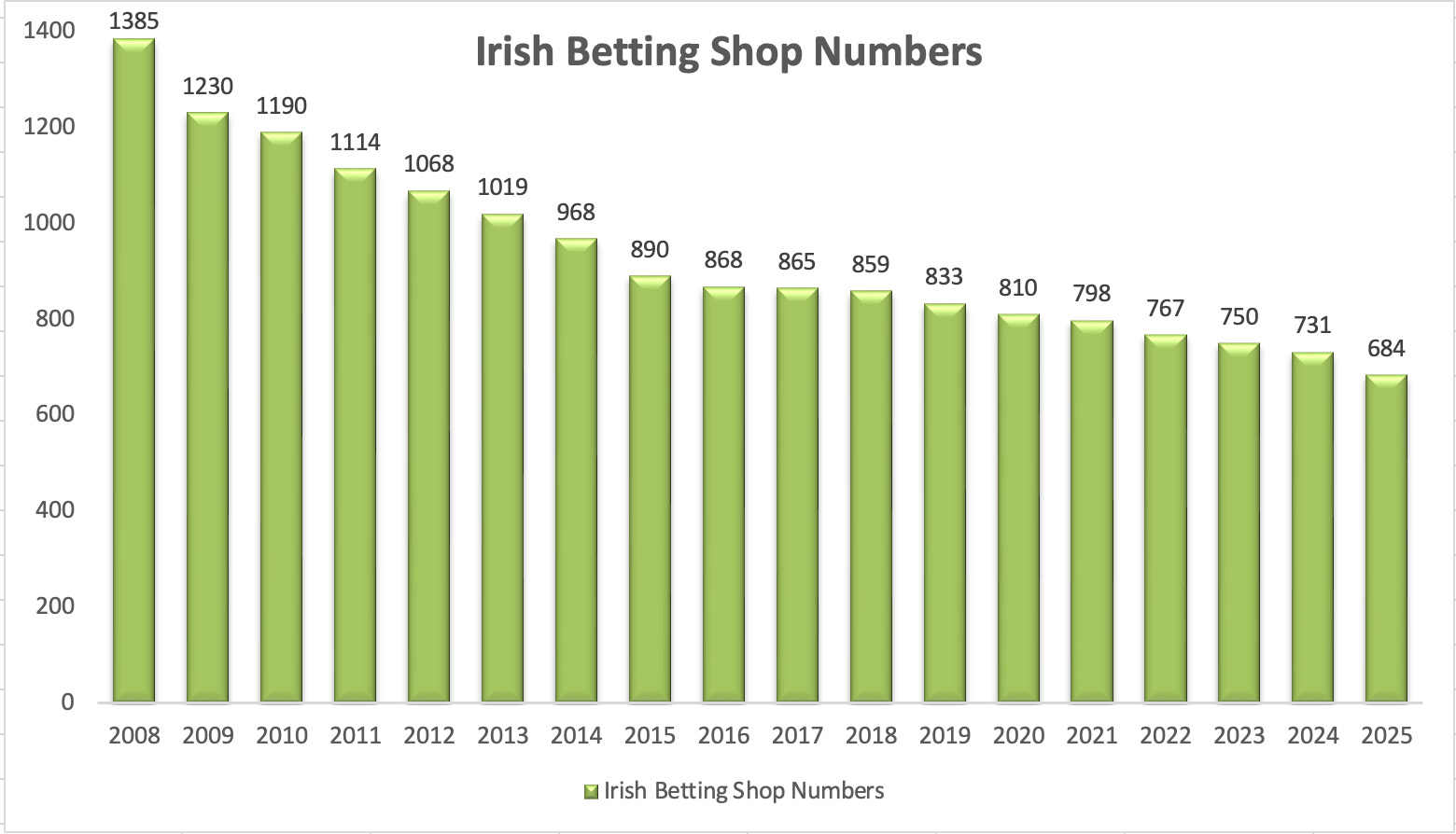
The latest data confirms that the number of licensed betting shops in Ireland has declined to 684 at the end of 2025. This continues a downward trend in retail betting shop numbers since the betting duty doubled in 2019. The contraction of the sector is not sudden. It has been gradual, persistent and commercially driven.
47 shops closed during 2025 alone.
Betting shops operate as licensed, adult only businesses in towns, villages and cities across Ireland. They provide local employment, contribute to local commercial activity and, for many customers, offer a social space centred around sport and racing. Behind each shop is a small team of local staff and a fixed cost base that must be met each month. These include wages, commercial rates, rent, utilities, insurance, data and media content costs, regulatory compliance requirements and betting duty.
While turnover figures can appear large, the sector functions on gross win after 85%-90% of stakes are returned to customers. From that margin, operators must meet wages, commercial rates, rent, utilities, insurance, data and media content costs, compliance requirements and betting duty.
Over recent years, operators have faced:
• Spiralling labour and operating costs
• Inflation across utilities, services and supplier contracts
• The doubling of betting duty in 2019
• Shift towards online betting
• The introduction of a new regulatory framework under the Gambling Regulation Act 2024
• Forthcoming licensing fees and regulatory levies, the full cost of which is still emerging
The Importance of Maintaining a Strong Regulated Market
Policy decisions must also take account of the wider market environment. The availability of unlicensed operators continues to grow internationally. If the regulated sector becomes commercially unviable, this risks enhancing the attractiveness of operators who do not pay Irish tax and who do not operate under Irish consumer protection standards.
Maintaining a viable, competitive regulated market is essential not only for employment and local economic contribution, but also for customer protection and exchequer returns.
Looking Ahead
Whether the current declining trend continues will depend largely on the cumulative impact of operating costs, betting tax, regulatory implementation, licensing fees and broader economic conditions.
Proportionality, regulatory clarity and stability in taxation policy will be key to avoiding further unnecessary closures and ensuring that Ireland retains a strong, compliant and consumer focused betting sector.
